

Weather alert: Rain hits parts of UAE with thunderstorms and hail forecast as temperatures soar to 49°C
Strong winds, blowing dust and intense heat expected on Saturday
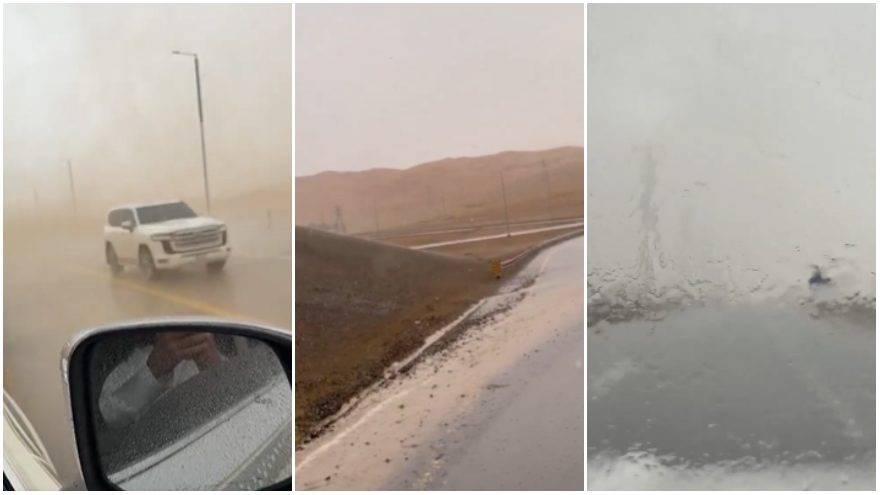
DUBAI – The United Arab Emirates (UAE) could witness a spell of unstable weather from Saturday, August 8, with convective clouds expected to develop across several parts of the country, bringing the possibility of rain, thunderstorms and hail while temperatures continue to hover near the 50°C mark.
Forecasts indicate the unsettled conditions may persist for several days, particularly across eastern and inland areas.
The National Centre of Meteorology (NCM) has also forecast a chance of rainfall on Saturday as convective cloud formation develops over parts of the country. At the same time, regional weather analysts expect broader summer rainfall activity across the Arabian Peninsula during the remainder of August, supported by evolving large-scale atmospheric conditions.
الإمارات : الان هطول أمطار الخير على طريق أبوظبي رزين في منطقة الظفرة #أخبار_الإمارات #مركز_العاصفة
— مركز العاصفة (@Storm_centre) August 7, 2026
7_8_2026 pic.twitter.com/XKB620MdbZ
The forecast comes as rainfall was already reported on the Abu Dhabi-Ras Al Khaimah Road in the Dhafra region on Friday, with videos shared by regional weather monitoring platforms showing showers in the area.
الإمارات : الان هطول أمطار الخير على طريق أبوظبي رزين في منطقة الظفرة #أخبار_الإمارات #مركز_العاصفة
— مركز العاصفة (@Storm_centre) August 7, 2026
7_8_2026 pic.twitter.com/SfYJmojyDi
Rain outlook
Weather forecasters expect cumulonimbus clouds to begin forming from Saturday over the eastern mountainous regions, central parts of the UAE, Al Ain and the Dhafra region. These cloud systems could produce occasional heavy thunderstorms accompanied by hail in some locations.
According to the forecast, the chances of rain are expected to continue for several days, with cloud development becoming more active during the afternoon and evening hours.
The NCM also expects Saturday's weather to be fair to partly cloudy, with convective clouds developing over eastern and southern areas before extending towards inland regions, increasing the possibility of showers.
Heat persists
Despite the growing likelihood of rainfall, temperatures are expected to remain extremely high across much of the country.
Maximum temperatures could reach 49°C in some areas, while Dubai is forecast to record highs of around 45°C and Abu Dhabi could climb to 46°C.
Official weather observations showed that the country's highest temperature on Friday reached 49.5°C in Bada Dafas, Al Dhafrah Region, at 12:45pm UAE local time.
Meanwhile, the lowest temperature recorded during the morning was 26.4°C at Jais Mountain in Ras Al Khaimah at 6:45am.
Wind warning
Winds are expected to be light to moderate, blowing from the southeast to northeast at speeds of 10kmph to 25kmph. However, they could become fresh to strong at times, particularly around convective cloud activity, with gusts reaching up to 50kmph.
The stronger winds may lead to blowing dust and reduced visibility in exposed areas.
Sea conditions are forecast to remain slight in both the Arabian Gulf and the Oman Sea.
Regional pattern
Beyond the UAE, weather specialists are forecasting a notable increase in summer rainfall across wide areas of the Arabian Peninsula during the remainder of August.
Meteorologists attribute the pattern to the continued development of the El Niño phenomenon, which is beginning to influence the region's broader atmospheric circulation. The latest Niño 3.4 index has reached approximately +1.5°C, indicating a strengthening event.
The warmer daytime temperatures over land are expected to intensify thermal low-pressure systems, helping draw moisture deeper into the interior of the Arabian Peninsula. Forecasters also point to continued moisture inflow from the Arabian Sea, even though the seasonal monsoon remains weaker than usual.
Additional contributing factors include warmer Arabian Sea temperatures, activity in the Somali Current, recurring upper-level atmospheric disturbances and periodic weakening of the Arabian high-pressure system.
Forecast guidance from both the Canadian GDPS and the European ECMWF weather models indicates favourable conditions for thunderstorm development across Oman and the UAE, including desert regions, although the two models differ on the expected intensity and geographical coverage.
The same weather pattern could later extend into parts of central and eastern Saudi Arabia, Qatar and Kuwait. Forecasters stress that long-range projections remain subject to change as new data becomes available over the coming days.